
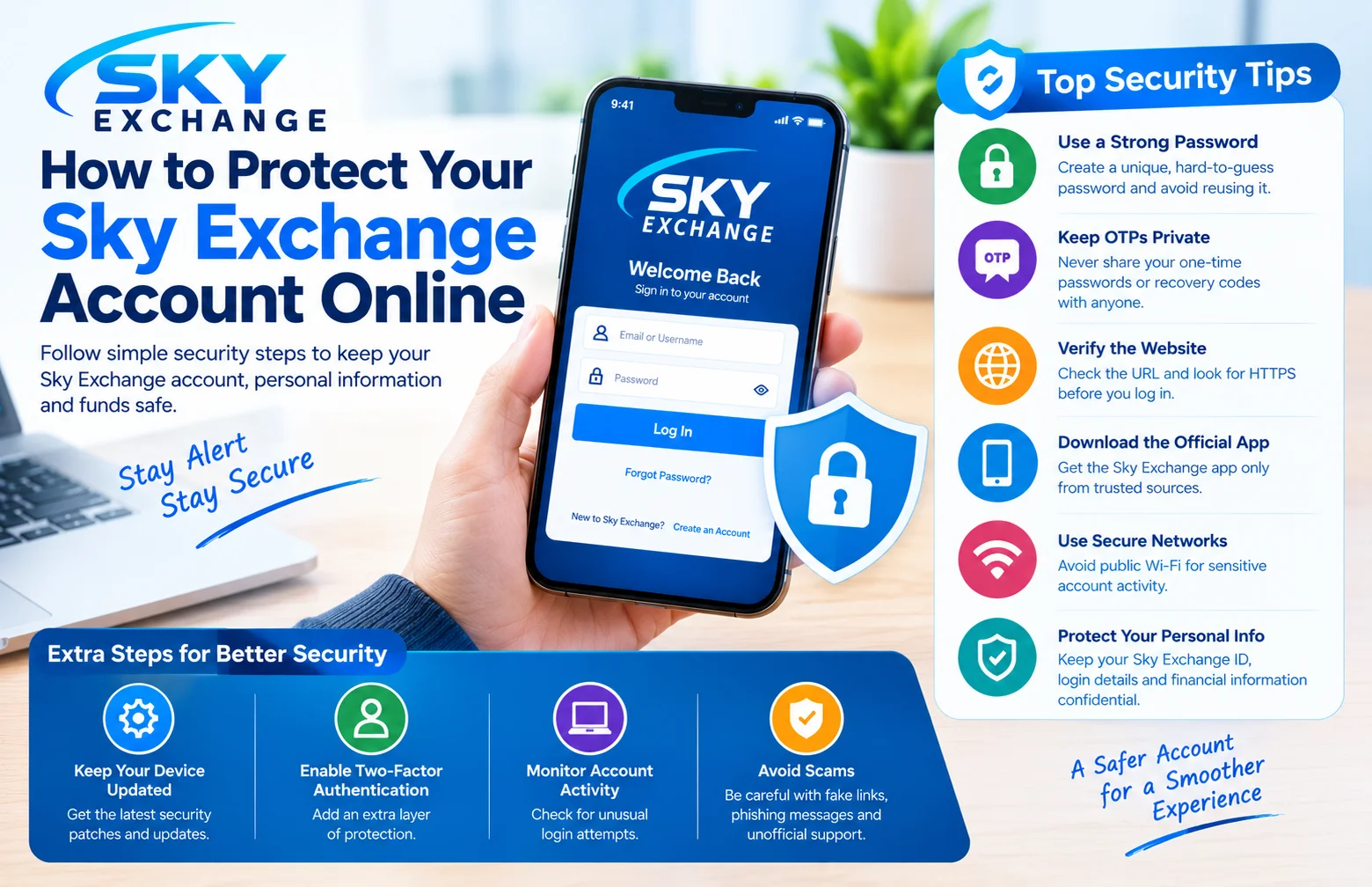
Online account security is crucial whenever you are on any site or mobile platform. Keeping your personal information, log-in and device secure can minimize the chances of unauthorized access, phishing, and online scams.
Users looking for Sky Exchange account security may want to know how to protect their Sky Exchange ID, how to log into Sky Exchange safely and how to avoid suspicious websites or apps. However you reach a service, whether through a mobile browser or an app, there are basic security measures that must be taken.
Security features available will depend on the service provider. Check the website or application and terms and privacy policy before signing in. Not all websites with the “Sky Exchange” name are official or reliable.
This guide offers some simple tips for preventing attacks on your account, recognizing scams, securing mobile devices and what to do when you notice suspicious activity.
Why Is Online Account Security Important?
Some personal information and account details may be available on online accounts which should be kept private. If a user’s logon information is compromised, another user could try to log on to the account or use the information to which the account is linked.
Protecting a Sky Exchange account starts with knowing about the risks associated with using the internet:
- Weak or reused passwords.
- Fake login pages and phishing links.
- Unofficial mobile applications.
- Requests for one-time passwords (OTPs).
- Unverified account-recovery services.
- Unsafe device and network practices.
Taking a few precautions before signing in can help reduce these risks.
1. Create a Strong and Unique Password
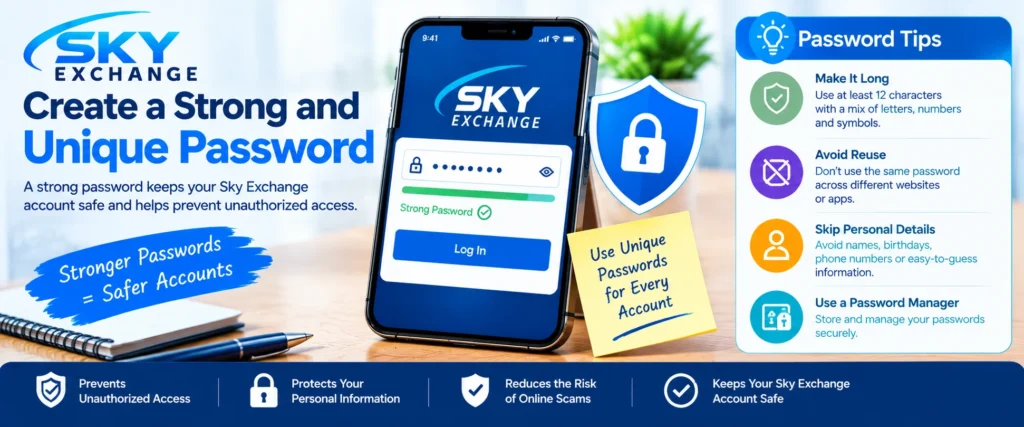
One of the most crucial elements of online account security is a strong password. Don’t use easy to guess passwords such as your name, birthday, phone number, or common number patterns.
Rather, develop a password which is hard to guess and unique to the account.
Password security tips
- Use a long password or passphrase.
- Avoid reusing passwords across different websites.
- Do not include easily discovered personal details.
- Consider using a reputable password manager.
- Change your password if you suspect it has been exposed.
If you use Sky Exchange login on multiple devices, make sure your password remains private and is not stored on shared computers.
2. Keep Your Sky Exchange ID and Login Details Private
Your Sky Exchange ID can be used as your account identifier and your password as your authentication. Consider both as confidential information for an individual.
Never share login information in public comments, forums, groups on social media. Keep in mind that when you share snaps, you could be exposing usernames, account information and more.
If someone asks for your password to fix your computer, activate your account or recover your account, you should never give it to them.
When someone asks you for your credentials to troubleshoot something, take a moment to confirm it from a trusted source before giving it to them.
3. Verify the Website Before Using Sky Exchange Login
Fake websites can imitate familiar names, logos, and login screens to collect passwords and other sensitive information.
Before entering your Sky Exchange login details, inspect the full website address carefully.
Signs to check
- Misspellings or unusual characters in the domain.
- Unexpected redirects to unrelated websites.
- Unsolicited login links sent through messages.
- Missing or unverifiable provider information.
- Requests for unnecessary personal or financial details.
- Browser warnings about an unsafe connection.
HTTPS encrypts the connection between your browser and a website, but it does not independently prove that the website is legitimate.
If the address appears suspicious, close the page and verify the correct website independently.
4. Be Careful With OTPs and Verification Codes
One-time passwords and recovery codes can be used to verify access or authorize certain account actions. Fraudsters may attempt to obtain these codes by pretending to be support representatives.
Follow these precautions:
- Never share an OTP with another person.
- Do not disclose password-reset or recovery codes.
- Avoid approving login requests you did not initiate.
- Do not enter verification codes on unfamiliar pages.
- Investigate unexpected verification messages.
If you receive an OTP without requesting one, do not share it. If you suspect an attempted account takeover, change your password through the verified service and review any available security settings.
5. Download the Sky Exchange App Only From a Verified Source
Mobile access is more convenient for some users. But, the download of an application from an unknown source can lead to a device being infected with malware or data theft.
Check if there is an authentic app for the Sky Exchange and the source before installing the app.
Look at developer information, privacy policy, permissions asked, update history, and compatibility. Never install an unknown APK or application that requests that you turn off built-in security features.
If you are unable to confirm that the application is genuine, don’t install it. A website or reference to an application does not mean that a legitimate application is available.
6. Keep Your Smartphone and Computer Secure
The security of the account also relies on the device you’re using. A device that does not have the latest security or is not protected at all could be more susceptible to online dangers.
Protect your device
- Install operating system and browser updates.
- Use a secure screen lock.
- Remove applications you no longer need.
- Review app permissions periodically.
- Avoid unknown software and suspicious browser extensions.
- Do not allow another person to access your account without permission.
If you use a shared computer, avoid saving your password in the browser. Sign out when finished and close the browser session.
7. Use Trusted Internet Connections
When using public Wi-Fi networks, there can be added risks, particularly when accessing sensitive accounts and inputting payment information.
When logging into accounts and making transactions, use a trusted, private connection when possible.
Don’t enter information if your browser warns you of a security risk. Never install anything you don’t know or adjust your security settings because someone says it is recommended by a Web site.
If a connection appears suspicious, wait to use it until you can use a trusted network.
8. Recognize Fake Support and Account-Recovery Offers
Scams over the internet can include folks stating they’ll help restore accounts, supply special access or deal with login issues for a cost.
Beware of anyone who:
- Requests your password or OTP.
- Demands an unexpected payment.
- Promises guaranteed profits or risk-free returns.
- Pressures you to act immediately.
- Sends unfamiliar links or application files.
- Claims to represent support without verifiable evidence.
Only use supports that have been verified independently. Never send any account information to strangers providing account services.
9. Review Account Activity and Security Settings
If the service has account-security controls, check them regularly. Some of the choices you have for the options differ from provider to provider, so check and see which ones are actually supported.
Check for features like password changes, account recovery, extra verification or active-session management.
Take immediate action if you see an unfamiliar login or unexpected change in your account. Change your password using the service that you have confirmed and confirmed support if necessary.
Not all platforms offer session-management or login history.
10. Protect Personal and Financial Information
Don’t give personal data to websites that you can’t confirm. Read the privacy statement and familiarize yourself with the information that is captured and what it is being used for or shared.
Research the recipient, the fees, conditions, and any complaints procedure before you make a payment. Don’t send money to someone you don’t know that claims to be able to activate or recover your account.
Incase financial information has been leaked, please get in touch with your bank or payment service provider as soon as possible and follow their instructions on handling security issues.
Common Sky Exchange Account Security Problems
Understanding how to respond to suspicious activity can help limit potential harm.
Forgotten Password
Use the verified account-recovery process if one is available. Check that you’re on the legitimate site before entering information or verification codes.
Don’t use unofficial recovery services that request passwords or fees.
Suspicious Login Attempts
If you receive unexpected login notifications or verification codes, do not share them. Change your password through the verified service if you suspect your account is at risk.
Review available security settings and contact confirmed support when necessary.
Lost or Stolen Smartphone
Secure the phone with the official tool of the operating system, if available, if lost or stolen. If you think that you may have compromised the password for important accounts, change them from a trusted device.
If you believe your account access has been compromised contact the service provider.
Accidental Visit to a Fake Website
If you opened a suspicious page but did not put anything in, close the page and refrain from downloading anything.
If you had entered your password, change it immediately using the trusted service. If you used that password elsewhere, change those accounts as well. If you share payment information, contact your bank or payment provider.
Responsible Use and Legal Awareness
When you use a Sky Exchange-branded service to bet or play gambling games, make sure that you know the financial risks and legalities before you do.
Eligibility and laws are dependent on region. Check if the service is legally available in your area, and test the claims of any licensing.
Gambling should never be used as a way of making money. Don’t borrow money or use funds that are required for other essential purposes. Limit your play and if it starts to hurt your finances, relationships, work or health, stop.
Frequently Asked Questions
How can I protect my Sky Exchange account online?
Use a strong and unique password, do not disclose your Sky Exchange ID on the Internet, verify the website before logging in, guard OTPs and maintain updated devices.
Is it safe to share my Sky Exchange ID?
Don’t post account details online. Never provide your password, OTP or recovery codes to anyone else.
How can I identify a fake Sky Exchange login page?
Review the entire domain name, search for shady redirects, confirm the domain provider and stay away from links that you were not expecting. Being on an https webpage does not guarantee authenticity.
Is it safe to download a Sky Exchange app from a third-party website?
Applications that have not been verified might include malware and/or gather personal data. Only install an app when its source and authenticity can be confirmed.
What should I do if I suspect someone has accessed my account?
Modify your password via the trusted service, check out security options, and reach out to trusted support. Contact your bank or payment processor if your information might have been leaked.
Should I use public Wi-Fi to log in?
Sensitive account activity is usually best done via a trusted private connection. Don’t log in if the network or site is suspicious.
Conclusion
The security of your Sky Exchange account online will require constant attention to security of your password, authenticity of your website, security of your device, and personal information. Practicing safe Sky Exchange login can help minimize the risks of phishing, unauthorized access and fraudulent offers of help.
Do not share OTPs or recovery codes, always check the source of the Sky Exchange application before installing, and do not share your Sky Exchange ID. Follow known recovery procedures and notify relevant support service if you suspect suspicious activity.
Always look at the privacy policy and terms of the related service before using it, and make sure that it is legally available in your area. It’s important to take the time it takes to check information, and to protect credentials, so you can make informed decisions online.